Note: Readers who have been with me for a while are likely aware by now that The Alexicon is working on a complete, chapter-by-chapter translation and light commentary of Voltaire’s Candide. I believe it to be a thoroughly important work for understanding the philosophical climate of the 18th century Enlightenment, and current English translations unfortunately flatten the humor which makes the original French such an enjoyable read. I do not just want readers enjoying the manuscript, though. In order to truly understand the significance of the work, one must become familiar with the historical context directly connected to Candide. Here, we will examine together the major points of Candide‘s influences, both philosophical and historical. Happy reading!
To a modern audience, Voltaire’s Candide can appear painfully absurd, full of gory details of suffering and purely unrealistic shocks of resurrected characters and ridiculous ideals. This is not the interpretation that Voltaire’s original readers would have gathered, though. In writing Candide, Voltaire employed his signature scathing pen to break apart a prevalent, and, in his opinion, absurd, philosophical concept of optimism which can be quickly summarized as, “the universe must be the most perfect that could have been formed.”¹ Voltaire saw the suffering that occurred as a result of the Seven Years’ War, countless diseases, the Inquisition, and even the city-crippling Lisbon earthquake and quite vocally concluded otherwise, believing that the world he lived on was deeply corrupt and absolutely capable of existing in a better state. Candide became Voltaire’s way of exposing perceived flaws in Leibniz’s reasoning in a way the general audiences of his time could easily comprehend.
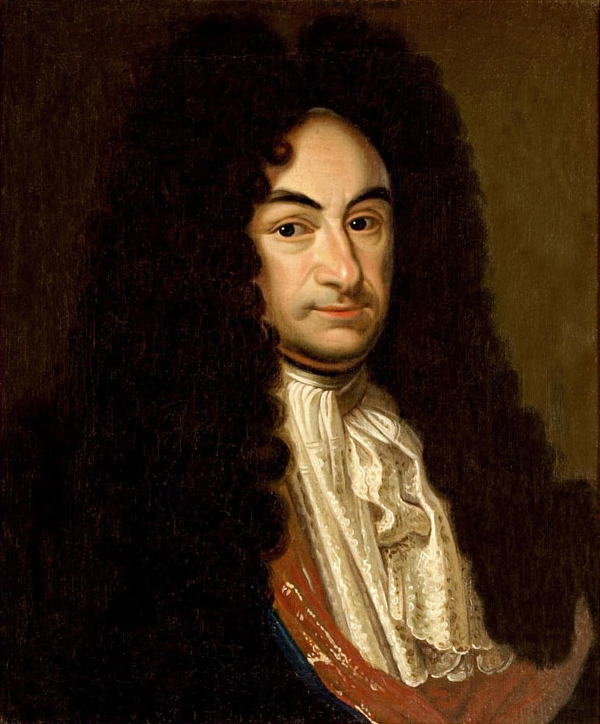
One cannot truly judge Voltaire’s work and opinions until they have a grasp on what Gottfried Wilhelm Leibniz, an early 18th-century polymath who promoted the philosophy of optimism, actually believed. In his 1710 work, Theodicy, Leibniz outlined his perception of the world’s condition in the following statement: “Now this supreme wisdom, united to a goodness that is no less infinite, cannot but have chosen the best. For as a lesser evil is a kind of good, even so a lesser good is a kind of evil if it stands in the way of a greater good; and there would be something to correct in the actions of God if it were possible to do better. … Hence the universe must be the most perfect that could have been formed; and since it is not possible for all things to be compossible, that is, to exist together in the same universe, God chose that combination of things which makes up the most perfect whole.”² Let us deconstruct this. It appears that Leibniz’s worldview was heavily influenced by Christian faith. Evidence suggests that though he valued critical examination of ideas, he did so with a theological basis, once claiming that, “Reason and Faith are of one mind, and both are given to us by God to be used, though in different ways.”³ Looking through this lens, we may gather from the original excerpt that he believed God was both supremely powerful and supremely good. In simplified terms, his argument is that if God is king, and God is good, then logic dictates that God would have examined all possibilities before making the universe as it is, concluding when he did so that it was the best-case scenario. This does not appear to be the thinking of an uneducated, foolish mind. Leibniz truly believed that God was capable of making any world a reality, and that we must be able to trust that if things could be better, they would be. Disagreement with this concept is suggested as the primary reasoning behind Voltaire’s writing of Candide.
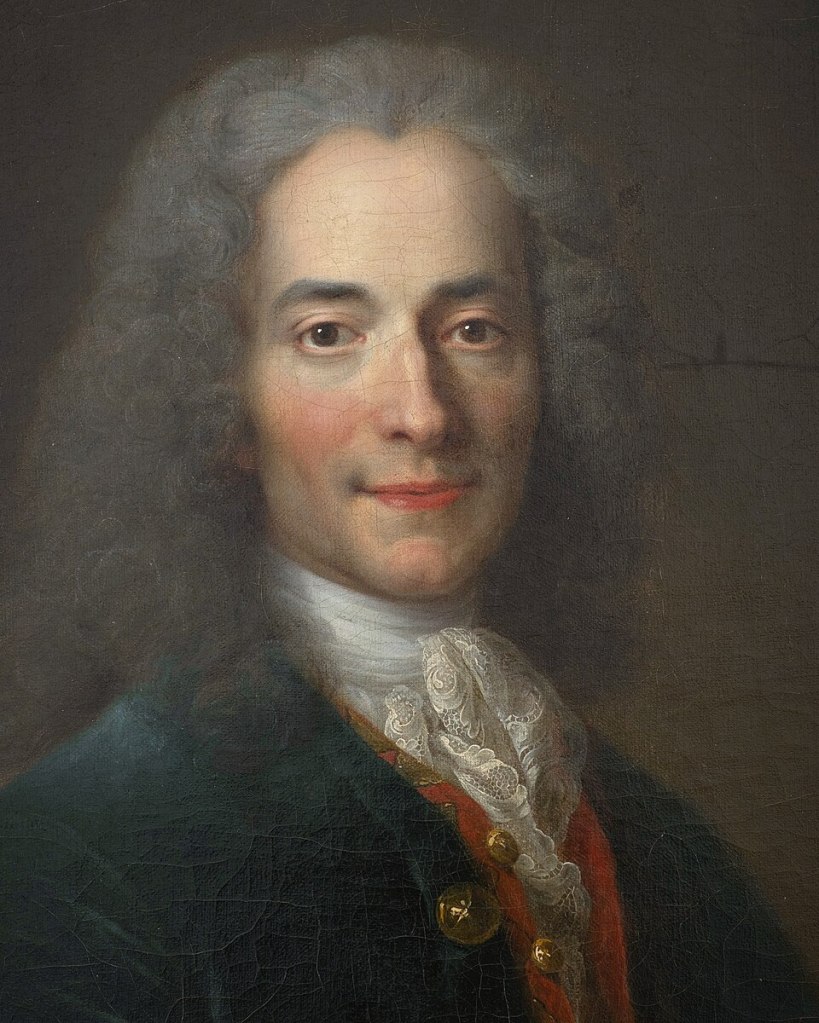
Indeed, when Voltaire looked at the world, he saw many forms of suffering, injustice, and needless harm. He believed that if the world was so broken, then assuming all was well and for the best was inherently contradictory. “All will be well one day, that is our hope; All is well today, that is the illusion,” he said in a poem he wrote about the disaster of the Lisbon earthquake.⁴ This suggests that in Voltaire’s eyes, the people around him were clinging to blind hope in the face of tragedy, yet simultaneously believing that the present moment was the best that it could be. In criticizing this concept, Voltaire was not likely trying to say that things could not be worse, but he disliked the blind faith that people had that their present circumstances were God’s will and, therefore, ideal. Throughout his life, Voltaire firmly believed that circumstances were neither permanent nor inherently right. He worked tirelessly to advance his own social station and leave a legacy on the world, and later in life, he turned his considerable wealth and reputation towards fighting injustice in the lives of others, such as the famous Calas case.⁵ In Candide, Voltaire actually speaks through his characters to define optimism as, “the madness of maintaining that everything is right when it is wrong,” without taking any action to fix it.⁶ Voltaire opposed optimism not because of any personal belief of pessimism, but because he perceived optimism as an ideal that aimed to excuse the world’s injustices by claiming that they were the best circumstances that they could be.
This begs the question; did Leibniz intend for optimism to become an excuse to accept the status quo? It appears unlikely. He argued strongly throughout his writings that free will was given to humanity for a purpose, and at the beginning of Theodicy, the same work from which he claims to be in the best of all possible worlds, he affirms that, “to omit what we ought to do, under the pretext that what will happen will happen, is a manifest error.”⁷ This sentence, coming from his own quill, contradicts what optimism had evolved into by the time Voltaire wrote Candide. It shows that Leibniz still believed that people should maintain proper moral standards and do what is right, even if they think it needless, and suggests that, had Leibniz still been living at the height of Voltaire’s career, the two philosophers might have actually found more in common than either of them expected. Their theoretical relationship is open to speculation, of course, but it seems unlikely that they would be enemies at first sight. The flaw in optimism appears to lie not so much in Leibniz as in the way his ideals were warped to suit individual preferences. Still, Voltaire was writing against optimism as it was in the present, not the past, so his grievances were not unfounded for his time, and Candide remained a perfectly relevant criticism in the wake of the Lisbon earthquake.
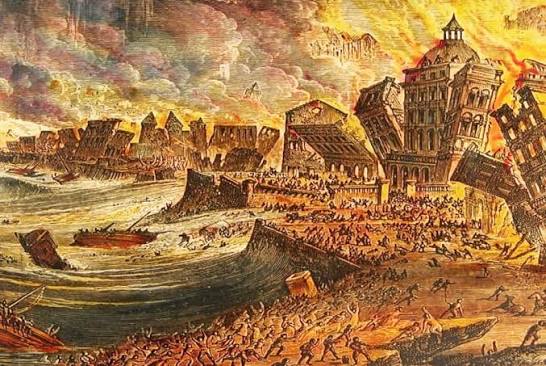
Let us elaborate on this earthquake, though, which we keep alluding to, as well as the other major events which motivated Voltaire to write Candide. The Lisbon earthquake was a massive natural disaster occurring on November 1, 1755, and since this was All Saints’ Day, all the city’s churches were well-attended when the earthquake struck. It was a massive quake, which collapsed 30 churches, along with dozens of other major buildings, triggered one of the largest tsunamis to ever grace the Atlantic coast, and caused much of the rest of the city to be consumed by fires. The total death toll was never strictly counted, but is estimated to be at least 30,000 to 70,000 people, a large fraction of Lisbon’s population, died as a result.⁸ Europe was shocked by this destruction, and many wise minds claimed that it must have been divine retribution of some kind. Voltaire disputed this, pointing out that every major church in the city was destroyed, while also questioning the morality of a deity that would let His people die while they worshipped Him.⁹ It can be presumed from his stunned reaction to both the disaster itself and the public’s reaction to it that this earthquake was a major catalyst in his writing Candide, which he published anonymously only a few years later. In fact, his protagonists arrive in Lisbon just as the earthquake strikes and barely survive the ordeal.¹⁰ Another likely catalyst was the Seven Years’ War, another event his characters endure, and one which Voltaire was heavily critical of. He viewed it as a needless show of monarchial greed and vanity which trampled common citizens underfoot, and described it through one of Candide‘s characters as, “war over a few acres of snow on the Canadian border . . . spending rather more on their lovely war than all of Canada is worth.”¹¹ He sharply criticized the way that leaders threw their citizens at the enemy, not caring whether they lived or died, for the sake of national glory. Frederick the Great, a previous friend of Voltaire’s whom he had by this point fallen out with, was actually featured in Candide through the rather obvious caricature of the Roi des Bulgares, king of an army meant to parody Prussia’s brutal military culture. Yet, in a seeming contradiction, Frederick and Voltaire actually renewed their correspondence during the war, after a few years of silence, with Frederick going so far as to confide in Voltaire his suicidal thoughts related to the pressure of the war.¹² Finally, the Inquisition, and religious fanaticism as a whole, are featured prominently throughout Candide, acting as another of Voltaire’s examples of why his current world was most certainly not the best of all possible worlds. Characters are whipped, humiliated, and even burned at the stake for being perceived enemies of the church, and the Inquisitor himself is portrayed as a dishonest, lustful man whom Candide actually kills in a chapter which becomes an exaggerated parody of the adventure narratives popular to the time.¹³ All of these tragic events, recent or ongoing at the time when Voltaire wrote Candide, served to help convince him that the world he was living in was deeply flawed and in need of reform, not blind acceptance.
Now, to complete our examination of context, let us consider how Candide was received by the public. The book became very well-circulated over the next few years, being discussed all across Europe’s greatest cities, but not everyone had the same opinion about its contents. While many normal citizens found it to be an entertaining yet scathing criticism of the world around them, certain authorities viewed it as something more dangerous. The Catholic Church banned the book, and cities such as Paris and Geneva had it banned as well, claiming that it inspired sedition.”I do not know who wrote this Candide,” Voltaire said in a letter to his publisher, “but I swear to you that I have had nothing to do with it. If you are printing it, you are committing a terrible indiscretion. I have more serious things to do than to write such schoolboy jokes.”¹⁴ Ironically, said publisher worked exclusively for Voltaire. Almost a decade had passed before he finally admitted authorship, and even then, he wanted to be remembered for his plays and academic works, not his satire. Though his non-satirical works are excellent pieces of writing, Candide is arguably Voltaire’s most well-known piece in the modern world, so he appears to have failed in respect to intended legacy.
Conclusively, Candide was written in a time of intense philosophical debate and multiplying tragedies, inspiring Voltaire to tackle a complicated subject with an abundance of illustrations he knew his audience would feel emotionally connected to. Though a small work, it reached a wide audience, winning a mix of praise and vicious suppression. Though it may not have been an accurate way to attack Leibniz’s original concept of optimism, it certainly struck the readers of Voltaire’s time, its popularity suggesting that the book’s message of doing one’s best to improve a fallen world resonated deeply with audiences.
Notes:
- G. W. Leibniz, Theodicy: Essays on the Goodness of God, the Freedom of Man and the Origin of Evil, trans. Hubbard (1710; repr., New Haven: Yale University Press, 1952), §416.
- Leibniz, Theodicy, §416.
- Leibniz, Theodicy, “Discours,” par. 1.
- Voltaire, The Lisbon Earthquake and Other Poems … (1901), 12.
- A. Owen Aldridge and Richard A. Brooks, “The Selected Letters of Voltaire,” Eighteenth-Century Studies 8, no. 3 (January 1, 1975): 360.
- Voltaire, Candide (1759; repr., Simon and Schuster, 2013), chap. 19.
- Leibniz, Theodicy, Preface.
- UC Berkeley, “Today in Earthquake History: Lisbon 1755,” November 1, 2008.
- Voltaire, The Lisbon Earthquake and Other Poems …, 10:9–11.
- Voltaire, Candide, chap. 5.
- Voltaire, Candide, chap. 23.
- Frederick the II, Letters of Voltaire and Frederick the Great (1927), Letter 130.
- Voltaire, Candide, chap. 9.
- Voltaire, Candide, letter D8193.
Works Cited
Aldridge, A. Owen, and Richard A. Brooks. “The Selected Letters of Voltaire.” Eighteenth-Century Studies 8, no. 3 (January 1, 1975): 360. https://doi.org/10.2307/2737756.
Aldridge, Alfred Owen. Voltaire and the Century of Light, 1975.
Berkeley, UC. “Today in Earthquake History: Lisbon 1755,” November 1, 2008. https://seismo.berkeley.edu/blog/2008/11/01/today-in-earthquake-history-lisbon-1755.
Kondrashkov, Yurii. “Philosophical Optimism and the Philosophy of Leibniz.” Journal of Student Research, University of Northampton 12, no. 2 (May 2023).
Leibniz, G.W. Theodicy: Essays on the Goodness of God, the Freedom of Man and the Origin of Evil. Translated by Hubbard. 1710. Reprint, Yale University Press, 1952.
Voltaire. Candide. 1759. Reprint, Simon and Schuster, 2013.
———. Letters of Voltaire and Frederick the Great, 1927.
———. The Lisbon Earthquake and Other Poems …, 1901.
———. Voltaire: Treatise on Tolerance. 1763. Reprint, Cambridge University Press, 2000.


Leave a Reply