
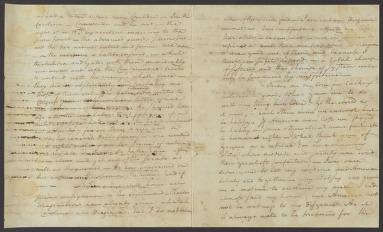
Handwriting has been a part of human civilization for thousands of years. Across countless nations, languages, and cultural movements, people have used the written word to record everything from seemingly inconsequential grocery lists to groundbreaking works of literature. It’s a natural part of our existence, one which I would argue technology can never truly replace. A typed document, such as the one you’re reading right now, can give good information, but I imagine many people would agree that a handwritten letter holds much more warmth and personality. You can get a sense of a person’s style of thinking, age, and even the emotions they were feeling while writing through the minute details of their script. I, for example, tend to scrawl down notes very quickly, resulting in a slanted style which gets less and less legible as my thoughts outpace my hand. I’ve prepared a sample below:
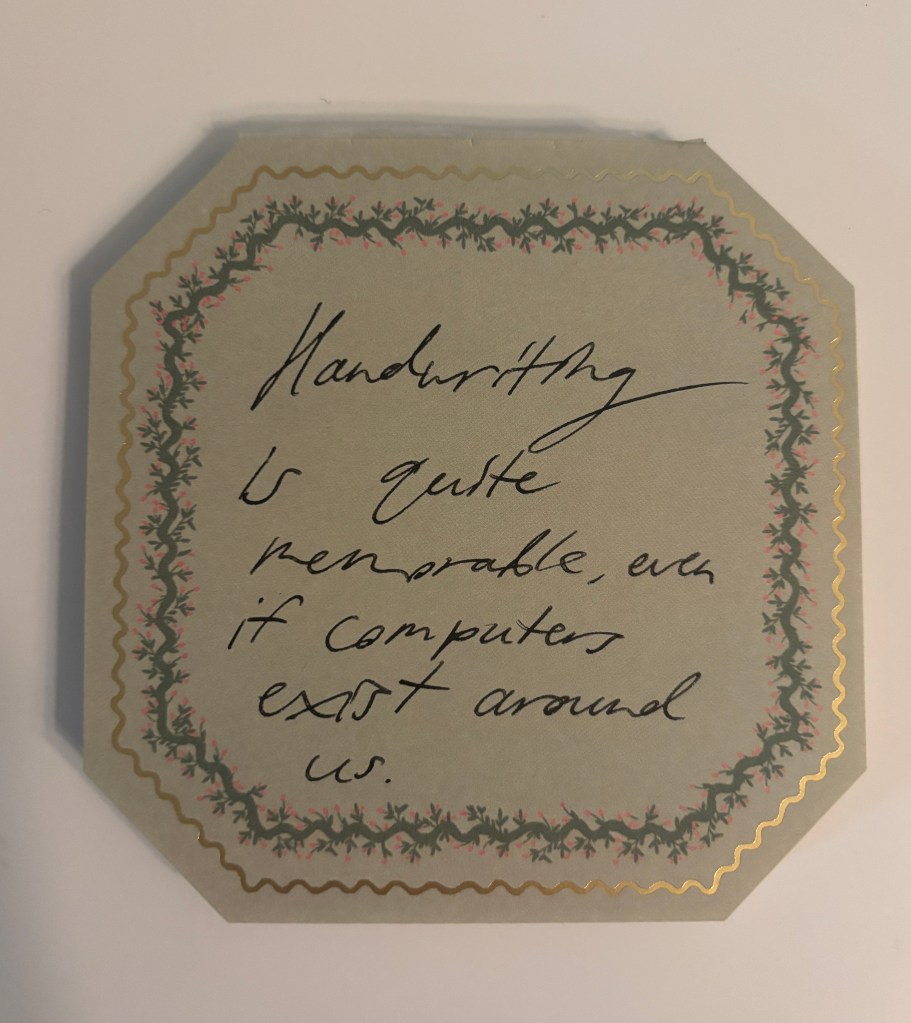
I’ve often been told that my script is rather challenging to decipher, and in our computer-dominated age, I have no trouble believing that. We’ve become incredibly used to even, separated letters that mimic a typed font, and anything else can be more difficult to understand, simply because it deviates from what we’ve been trained to expect. Therefore, handwritten historical documents aren’t exactly intuitive reading.
In the 18th century, for example, well-educated writers would often use dramatic cursive filled with large capitals and shrunken lowercase letters. Most modern people I’ve talked to, regardless of their own level of education or linguistic proficiency, find documents like these difficult to read. Go back a few centuries further, and scripts like the Florentine, Gothic, and Carolingian minuscule were the standard, some of which are truly indecipherable to the untrained eye. Let’s look at some samples, to get a better sense of what we’re dealing with.
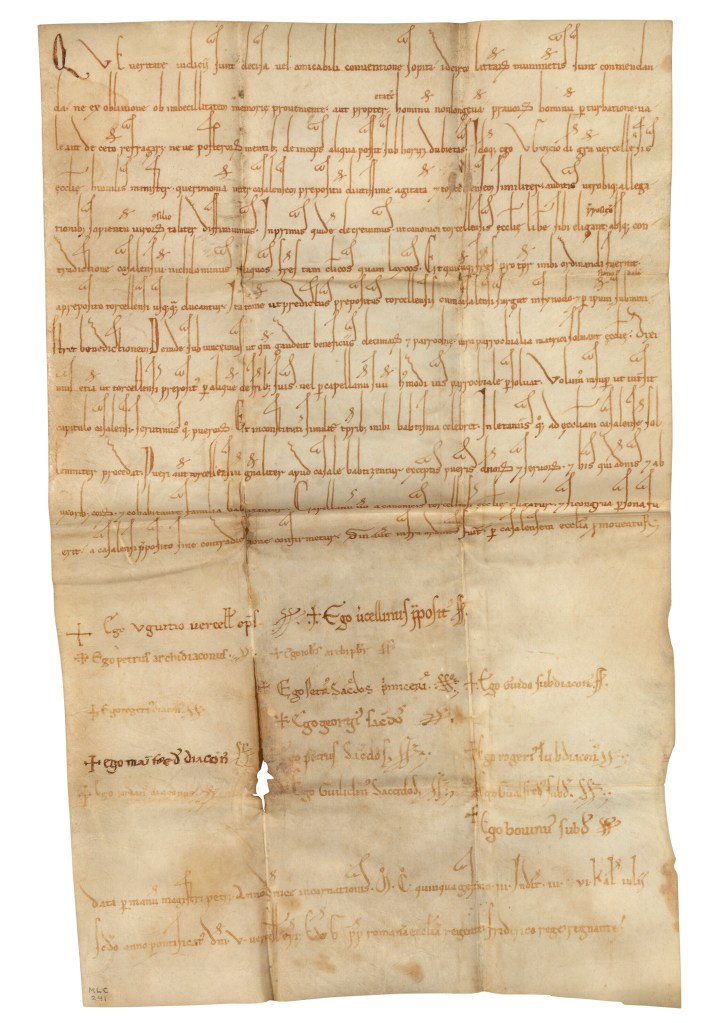
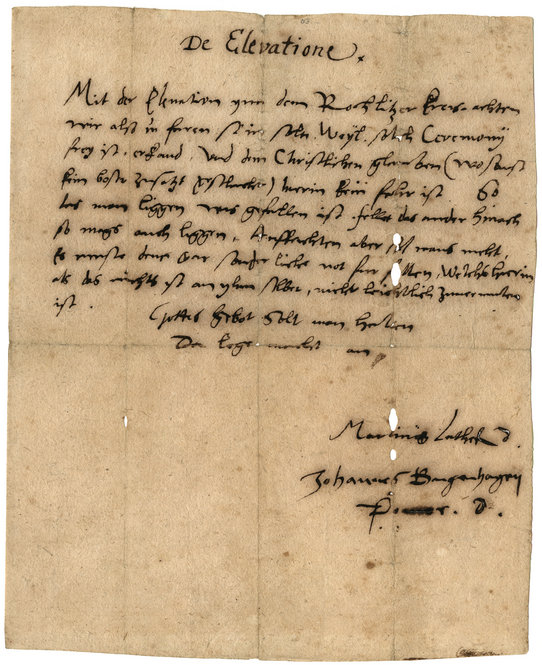
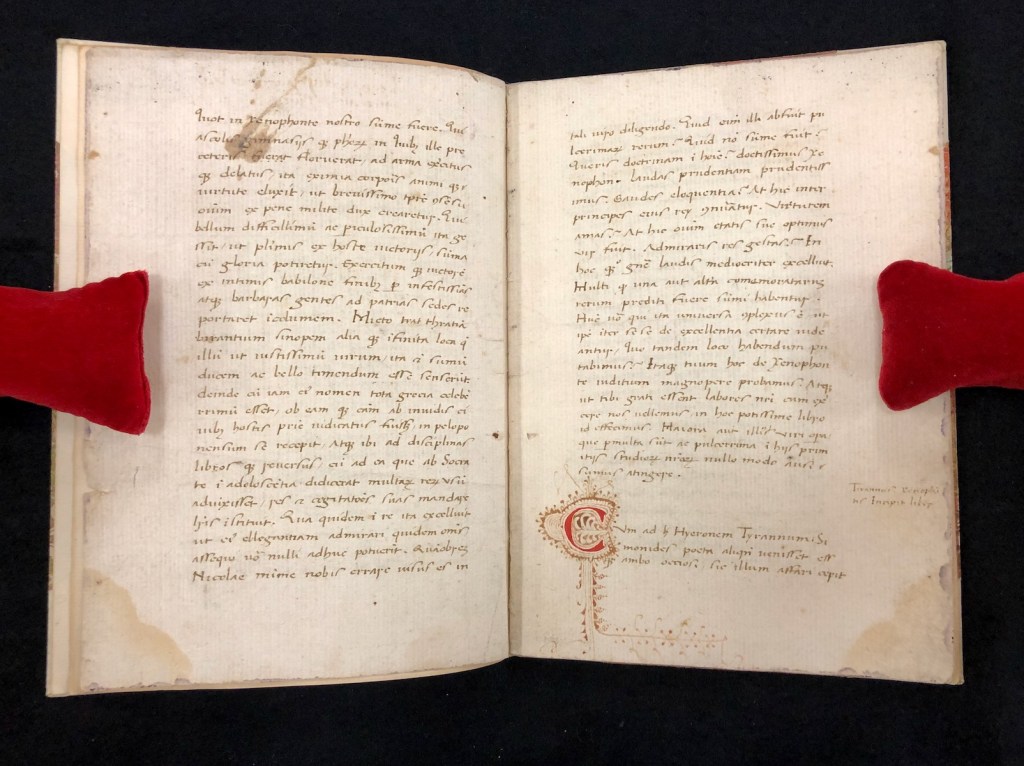
As you can see, writing styles have varied quite noticeably over time, and none of them look much like the writing we’re used to seeing today. Even after the invention of the printing press revolutionized the publishing industry, font styles didn’t immediately become what they are today. Early printed books, such as the famous Gutenberg Bible, often used tight, sharp-lettered fonts which are rather different from our beloved Times New Roman or Arial.
So, how exactly do historians analyze these old documents? Are they even worth reading? Do you, as part of the general public, need to be able to read them?
Well, let’s start with the first question. Paleography is the study of deciphering archaic handwriting and ancient writing systems. It encompasses everything from learning how to recognize the equivalents of modern letters in old scripts to assigning a date and place of origin to a document. The study primarily focuses on European languages (especially Greek and Latin, which formed a linguistic foundation for many of them), but it can be applied to virtually any language or period. Codicology, the study of understanding a book or document’s physical construction, is closely related to paleography, but they aren’t quite the same thing. Both skills are important.
Paleography includes:
- Deciphering old handwriting
- Deciphering old script styles and why people were using them (for faster writing, clearer text, etc.)
- Estimating the age of a document based on stylistic details, plus tracing changes in writing style based on time and location
- Identifying where a document was written
- Identifying who wrote a document (not always possible due to lack of information, but it has been done before)
- Detecting forgeries of documents and verifying the authenticity of a source
These all seem like relatively small abilities, but they’re crucial for studying history. Primary sources are the most authentic pieces of history available to us, as they give a record of a period or event which hasn’t been potentially muddied by intermediate sources. We can read someone’s thoughts or experiences in their own words, by their own hand. That’s obviously good for historians who want to know if and how an event happened, but it has deeper uses, too. By looking at smaller details like choice of words and what things the writer chooses to mention (they record going to the market to buy eggs, but say nothing about the war raging outside their city, for example), we can get a better sense of how people actually talked in the past, as well as the interests and priorities of a culture. We can examine events that are very well-known to modern readers, such as the American Revolution, through the perspectives of individual soldiers and civilians on both sides of the conflict. This gives priceless insight into what it was actually like to live during another time, instead of us just trying to piece things together from a 21st-century perspective.
Furthermore, paleography allows us to decide, with as much accuracy as possible, when something was written and if it’s a reliable source. People often forget that just because a document is old, it doesn’t automatically mean it’s authentic. Paintings, letters, ledgers, and all kinds of other things have been forged throughout history, and it’s a paleographer’s job to determine whether or not the item they’re examining is actually from the source it claims to come from. Something could be a 200-year-old paper trying to masquerade itself as a medieval charter or a history-changing letter between powerful rulers. That’s why we always have to be cautious when we first uncover a shocking new source. We don’t know right away if it’s legitimate.
Also, if it turns out to be a fake, that opens some more interesting questions. Why was the forgery made? Who made it? Was their goal as grand as political intrigue, or simply an attempt to make some extra income through dishonest means? Any answer we find gives us a better insight into the lives of “normal” people in the past, so even a forgery can ultimately have some value.
Does the general public need to know paleography, though? Is it really that important? Speaking as a historian, I believe that paleography is an incredibly important discipline, but not one that should be a required skill for the average history enthusiast. I’d argue that there’s certainly merit in being able to read something in its most primary form, because a physical document gives the best chance of correctly dating a source and finding any details outside of the actual writing (such as estimating someone’s socioeconomic background by how precise their script is or what type of ink they’re using). Not everyone cares about these minute details, though, and learning paleography is a lot of work. Therefore, I think understanding original documents is a valuable pursuit if you have the time and resources to do it well, but in our modern age, many of these records can be found as typed, digitized resources, too. It really isn’t necessary to know paleography in order to casually study history. Professors have worked hard for years to transform the contents of this information into documents with fonts that any modern reader can recognize, meaning that the overall content of a piece can easily be interacted with. If you want to learn paleography for fun, go for it! If you want to go into academia, you’ll certainly need it. If all you want is to sniff around the odd corners of the past, though, you don’t need to worry about mastering niche skills. Just enjoy what you find already digitized and leave the transcription work to the professors. History can be explored at any level, after all.
Suggested online resources, if you want to learn:
For learning paleography, especially focusing on European scripts and languages:
- The National Archives (UK): Early Modern English handwriting, free and online
- Richard III Society: Medieval handwriting, focusing on everyday writing styles, not free but operates as a correspondence course where teachers will review and correct your work
- University of Cambridge: English handwriting 1500-1700, free and online
- The Newberry Library: multiple languages, classes offered in-person for graduate students, plus a directory of online resources
Online archives for finding documents:
- Voltaire Lab (University of Oxford): great source of 18th-century documents, specifically those related to Voltaire and the Enlightenment as a whole
- Internet Archive: multimedia resources on just about any topic
- Project Gutenberg: online library of free books and documents
- National Archives: exists for many countries, but the British and American archives are especially extensive
- Any university library: most universities have digital versions of many of their rare books and manuscripts available online. Harvard and The University of Michigan have especially good collections.


Leave a Reply