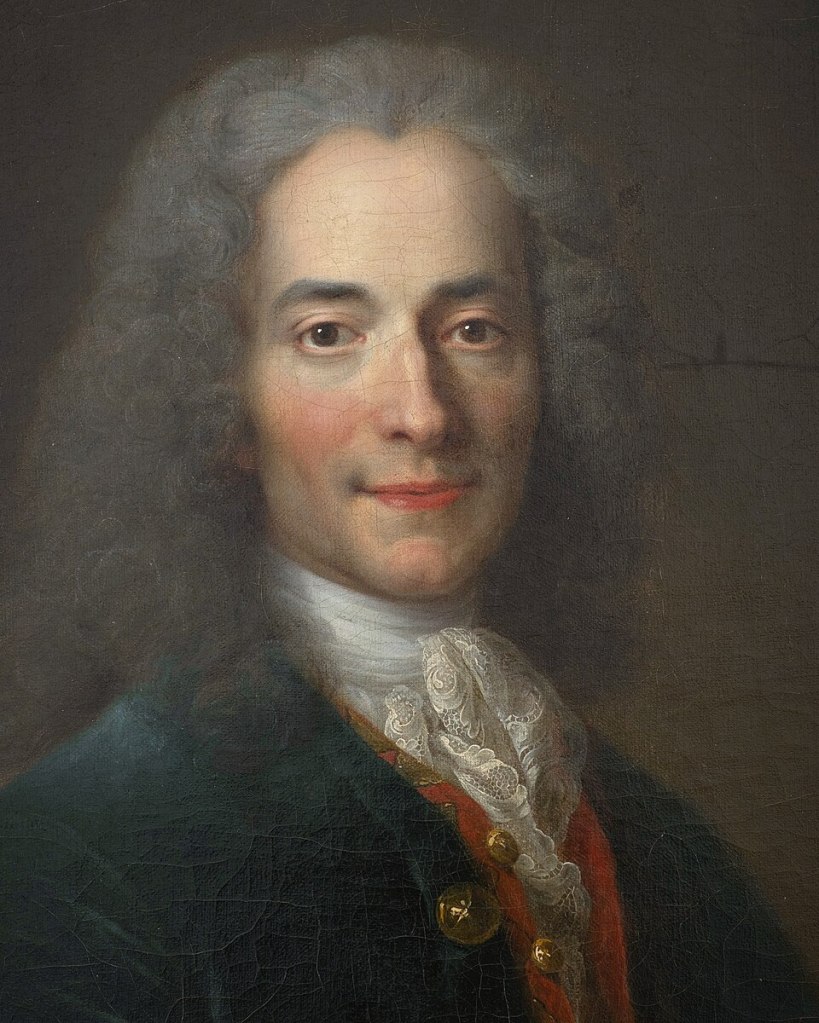
Translating “Candide” is the biggest project currently being undertaken on The Alexicon. Not only am I creating a lightly-annotated translation (a fully published version would contain heavier commentary, of course), but I am creating supplemental resources to ensure readers understand not just the literature, but its exigence and cultural significance. Anything “Candide”-related can be easily accessed from here.
-
Candide (English Translation): Chapter 11
Chapter 11: The old woman’s story Note: This chapter contains a scene of kidnapping, as well as indirect references to sexual violence. Viewer discretion is advised. “I was not always such an old crone as I am now; my eyes did not used to be so red as this, nor did my nose touch my…
-
Candide (English Translation): Chapter 10
Chapter 10: The distress in which Candide, Cunegonde, and the old woman arrived at Cadiz, and their embarking on a new journey. “Oh, what a disastrous series of events. All my pistols and diamonds are gone” said a crying Cunegonde. “How will we live? What will we do? Where will I find another Jew or…
-
Candide (English Translation): Chapter 9
Chapter 9: What happened next to Cunegonde, Candide, the Grand Inquisitor, and a Jew. This Issachar was the most hot-tempered Hebrew ever seen in Israel since the captivity in Babylon. “What!” he said, “Galilean b—h, that’s not enough for Monsieur Inquisitor? That rascal needs to share with me too!” In saying this he pulled out…
-
Candide (English Translation): Chapter 8
Chapter 8: The story of Cunegonde. “I was in my bed, deep asleep, when a storm outside drove the Bulgares to our beautiful home of Thunder-ten-tronckh. They slit the throats of my father and brother, and cut my mother to pieces. One huge Bulgare, at least six feet tall, saw that I was unconscious and…
-
Candide (English Translation): Chapter 7
Chapter 7: How an old woman cared for Candide, and how he found his love. Candide did not take courage, but he followed the woman to a hovel: she gave him a pot of ointment to rub on his wounds, and left him to eat and drink. She gave him a little bed, and next…
-
“Candide:” A Contextual Guide
Note: Readers who have been with me for a while are likely aware by now that The Alexicon is working on a complete, chapter-by-chapter translation and light commentary of Voltaire’s Candide. I believe it to be a thoroughly important work for understanding the philosophical climate of the 18th century Enlightenment, and current English translations unfortunately…
-
Candide (English Translation): Chapter 6
Chapter 6: How the Portuguese made an Auto-Da-Fé to prevent earthquakes, and how Candide was whipped. After the earthquake which had destroyed three quarters of Lisbon, the sages of the nation could not think of any better way to prevent total ruin than give the people a nice human torch, a spectacle also known as…
-
Candide (English Translation): Chapter 5
Chapter 5: Tempest, Shipwreck, Earthquake, and what became of Candide, Pangloss, and the Anabaptist Jacques Half of the ship’s passengers weakened, expiring in the midst of the inconceivable agonies which rocked the vessel and brought contrary senses into one’s nerves and bodily humors. These passengers, while they still lived, did not have the strength to…
-
Candide (English Translation): Chapter 4
Chapter 4: How Candide reunited with his old master of philosophy, Dr. Pangloss, and what had happened to the man. Candide, filled with horror and compassion for this poor soul, gave to the man the two florins which had been received from the anabaptist Jack. The beggar, shedding an abundance of tears, staggered up to…


