When people imagine the past, it can feel strange and incredibly foreign. Sure, people have always been people, but we still can have a tendency to fixate only on surface differences such as fashion choices or architectural styles. We can assume that in the 18th Century, everyone was stuffy, foppish, and prejudiced. This simply isn’t true. Even when the exterior of a period is different from the modern world, human nature, with all its quirks, has remained largely unchanged throughout history, and every century has had a wide variety of personalities. I hope that this short collection of anecdotes related to the 18th Century can help get you better acquainted with just how vibrant and entertaining people are, regardless of the year.
Of course, don’t assume that every single person fits some sort of trope or archetype suggested by these anecdotes. A few amusing stories is never enough to give a full picture of an entire civilization, and I’m not trying to tell you that everyone was a prankster. I just want you to walk away with a new perspective to challenge any existing ideas you may have of the 18th Century as a stiff, serious era of history.
1. Potoooooooos the Racehorse
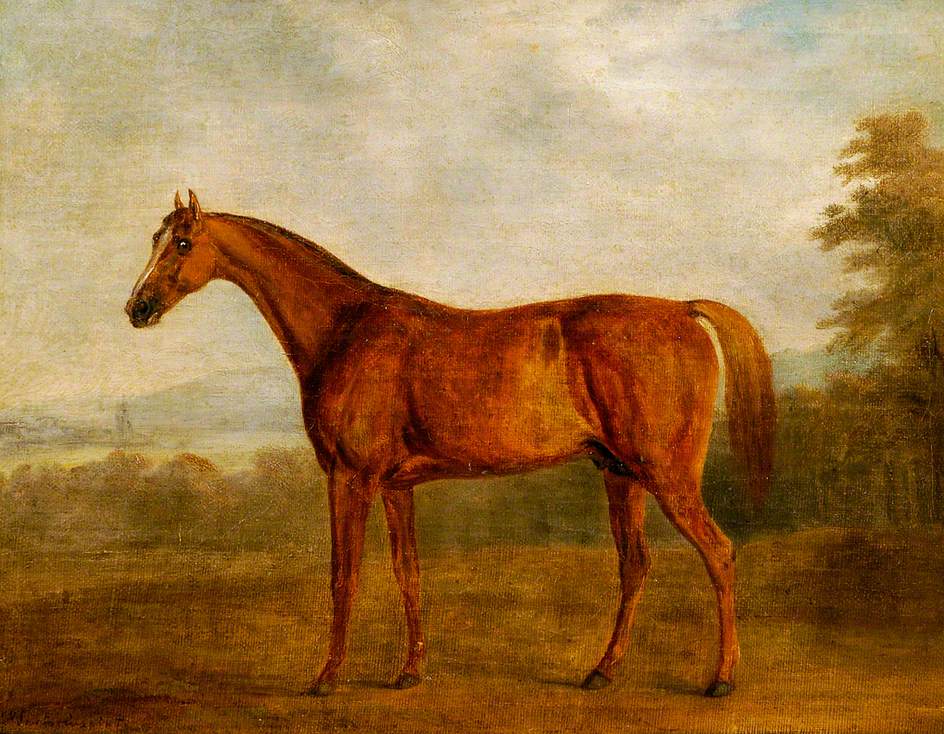
Long ago, in 1773, a colt was born in the stables of Willoughby Bertie, 4th Earl Abingdon. This man was known for being both a polarizing English politician and a skilled flautist, but one of his greatest passions in life was breeding and racing thoroughbred horses. Therefore, it really shouldn’t have been remarkable at all that another future competitor had come into his care, but it was, for one reason: the horse’s name. Right after the colt’s birth, the Earl asked one of his stablehands to write the its name on its feed basket. He wanted the horse to be named “Potatoes.” The stablehand did as instructed, writing “Potoooooooos.” (Thoroughbred Heritage)
Confused? Read a bit closer. Pot + 8 o’s = Potoooooooos. The stablehand had reasoned that he was supposed to write a sequence of eight letter o’s after the word “pot.” The Earl, amused by this mishap, decided to keep the name, and the horse’s name was henceforth spelled always as either “Potoooooooos” or “Pot-8-o’s.” Not only that, but he actually became an unusually successful racehorse. He won thousands of guineas in prize money for his owners, who were first the Earl Abingdon, and then later the 1st Earl Grosvenor, whose prize horse Potoooooooo had previously beaten in a race. The horse’s racing career lasted from 1777 to 1784, and he afterward sired a number of successful descendants, including a quartet of horse known as “Waxy,” “Champion,” “Asparagus,” and “Tyrant.” Some horses still exist today with traces of his genes, and horse names such as these weren’t even very unusual in the 18th and early 19th centuries. It changes the way you envision stuffy old aristocrats, doesn’t it? Not only that, but Potoooooooos is still being honored today. A horse skeleton which experts believe to be his is currently on display in England’s National Horseracing Museum. (Wolfe) If you ever get the chance, feel free to visit him.
2. Mozart’s Pranks*
*This next anecdote is rather contested in the historical community. I find it intriguing, and I’ll attempt to give you both a summary of the occurrence and the explanations for both perspectives about it, so that you can draw your own conclusions. Comparing sources and opinions is an essential part of being a historian, so we purposely included this slightly less credible story to give you some practice in interpretation. Good luck! There aren’t necessarily any wrong answers, as long as you can defend your opinion.
Over time, I’ve noticed that many people tend to view great composers as serious, stuffy old men who write music obsessively and never show any glimpse of a personality. Though it’s true that some composers were rather elderly or serious, this assumption is still wildly inaccurate, especially in the case of one of the most prolific musicians of all time, Wolfgang Amadeus Mozart. He was known during his lifetime for bold, comical, and sometimes even downright vulgar jokes. From purposely composing every mistake he could think of in a song so bad it took actual skill to write it to making his friends sing an insulting song to a group of highbrow partygoers (these anecdotes are both well-documented; in fact, Mozart included the vulgar song in his official self-compiled registry of music), Mozart had no qualms about playing pranks on people. However, one particular prank is especially distinctive.
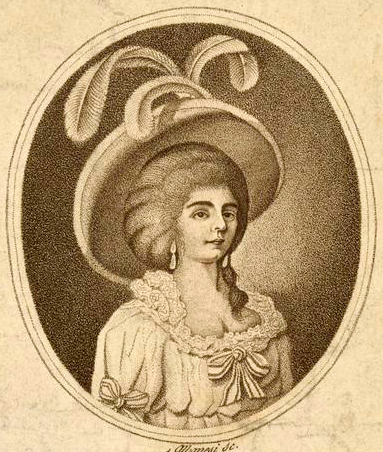
As you may already know, Mozart was an exceptional opera composer, with productions such as The Magic Flute and The Marriage of Figaro being commonly performed even today, more than two centuries later. However, that doesn’t mean that he got along with every one of his singers. Mozart generally wrote the parts for his operas already knowing which singer would be performing them at their premier, so he tailored plenty of details to each performer’s specific talents. One of his leading soprano singers, Adriana Ferrarese del Bene, was well-known for her habit of tilting her head upwards when singing higher notes, and dipping her head down to sing lower notes. Mozart found her rather irritating and arrogant, and in an effort to supposedly get some subtle musical revenge, he wrote one of her songs to include constant jumps from low to high notes, and vice versa. This apparently made her look a bit like a chicken, bobbing her head constantly up and down as she sang. (Davis)
Now, it should be noted that there are no primary sources from Mozart himself confirming if this was an intentional prank. The idea that he did it maliciously comes from William Mann, an English music critic of the same era. Mann actually wrote an extensive work, called, “The Operas of Mozart,” in which he dissected multiple shows down to the last detail.(Mann) He was certainly knowledgeable on music, and his book has been generally respected as a primary source, but he never gives any indication of where he first heard that Mozart wrote the song, which was called “Come Scoglio,” with the intention of making fun of Ferrarese. This suggests that it may actually have been his own conclusion, drawn without any legitimate proof. Furthermore, songs with large jumps in notes weren’t uncommon for the period, even if this one took it to an extreme extent. However, it was well-known that Mozart wasn’t fond of Ferrarese, and as mentioned previously, he loved pulling pranks and humiliating people he disliked. A prank like this would’ve been completely in character for him, and since this particular opera, Così fan tutte, was meant to be comedic, it was an easy opportunity to justify his actions through saying that he was trying to be funny if anyone criticized him.
I personally believe that this likely was an intentional prank, since Mozart has been credibly recorded playing many similar musical jokes. However, I recognize that there is no way to absolutely confirm this without new evidence, so I invite you all to explain your own perspectives in the comments.
3: Coffee is Banned?
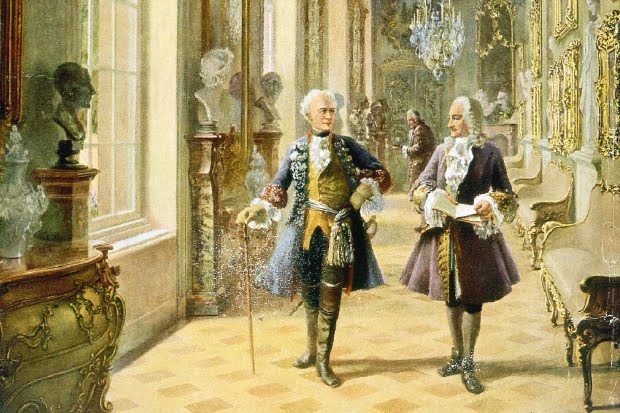
Coffee is quite a popular drink in the 21st century. However, it was also incredibly popular in the 18th century, even if their version of coffee was generally more watered-down than ours. Frederick the Great, King of Prussia, actually became quite concerned about this over time. In 1777, he instated an official ban on coffee throughout the country, because he wanted Prussians to consume more beer. Here’s what he said about it in The Coffee and Beer Manifesto:
“It is a most detestable thing that my subjects take to drinking coffee… My people must drink beer. His Majesty was brought up on beer, and so were his ancestors, and his officers as well.”
Considering how unstable Frederick’s relationship with his father had always been (see our article Frederick the Great: The Effects of an Upbringing), it appears very unlikely that this was done out of some sense of family loyalty. There are a few reasons why he might’ve done this, though. First, beer was considered to be a very traditional, culturally important drink in Northern Europe during this period. Second, coffee was a foreign product, and it was becoming especially popular in rival nations such as France. Frederick didn’t want his citizens economically supporting a country that he’d fought wars against only decades earlier. (Spina) Drinking beer instead of coffee kept money safely within the Prussian economy. Third, and perhaps most importantly, coffeehouse culture was developing during this period into something which could be quite difficult to regulate.
Coffeehouses became destinations for lively conversations and debates. In fact, they were known as one of the best places to go if one wanted to hear new, exciting ideas, related to the Enlightenment. In France and the United States, they even gained a reputation for fanning the flames of revolution by bringing people together in a location without much government supervision or ability to censor speech. Frederick was not necessarily a dictator, but he was considered to be a despot, and he liked to have some level of influence over what ideas were being popularized within his nation. Coffeehouse conversations were difficult to monitor or control. Worried about such things, Frederick actually sent government officials out to sniff for illegal coffee production and shut down any offending establishments.
Such worries may seem strange and even funny to a modern reader, but in the 18th Century, there was a certain level of reason behind them. Indeed, all the anecdotes I shared might sound unusual, but they can help us all see that human tendencies towards anxiety, jealousy, spite, or even just good-natured lack of critical thinking have existed all throughout history.
Bibliography
Davis, Melanie. 2025. “Mozart Once Played Poultry Prank on Soprano Soloist, Proving Petty Behavior Is Timeless.” American Songwriter. April 2025. https://americansongwriter.com/mozart-once-played-poultry-prank-on-soprano-soloist-proving-petty-behavior-is-timeless/.
Frederick the Great. 1777. The Coffee and Beer Manifesto.
Mann, William. 1977. The Operas of Mozart. New York : Oxford University Press.
Originally circulated in the late 18th Century
“Pot-8-Os.” 2026. Tbheritage.com. 2026. https://www.tbheritage.com/Portraits/Pot-8-Os.html.
Spina, Matthew. 2024. “Why Frederick The Great Of Prussia Banned Coffee In Favor Of Beer.” Tasting Table. January 15, 2024. https://www.tastingtable.com/1491350/frederick-the-great-prussia-coffee-ban/.
Wolfe, Kerry. 2025. “Potoooooooo.” Atlas Obscura. 2025. https://www.atlasobscura.com/places/potoooooooo.


Leave a Reply