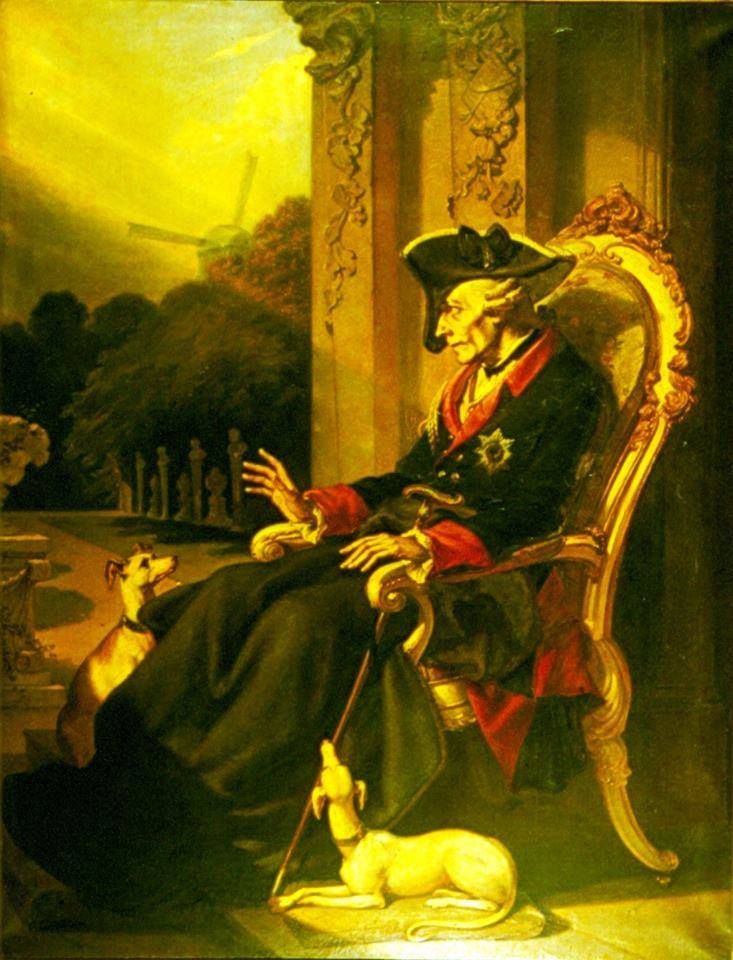
Frederick the Great is one of the most well-known rulers of the 18th century, famous for taking Prussia from a backwater state to a military nation able to fight against powers twice its size. However, there was more to him than just a warrior king. Frederick was also a passionate musician and philosopher. He appreciated the arts, and funded everything from scientific academies to opera houses. Alec Avdakov, of the groundbreaking podcast The Life and Times of Frederick the Great, has been known to assert that there is a version of Frederick for everyone. This is certainly true, given the king’s varied interests, beliefs, and preferences, but one version of Frederick the Great which deserves more recognition is that of Frederick the Dog Lover.
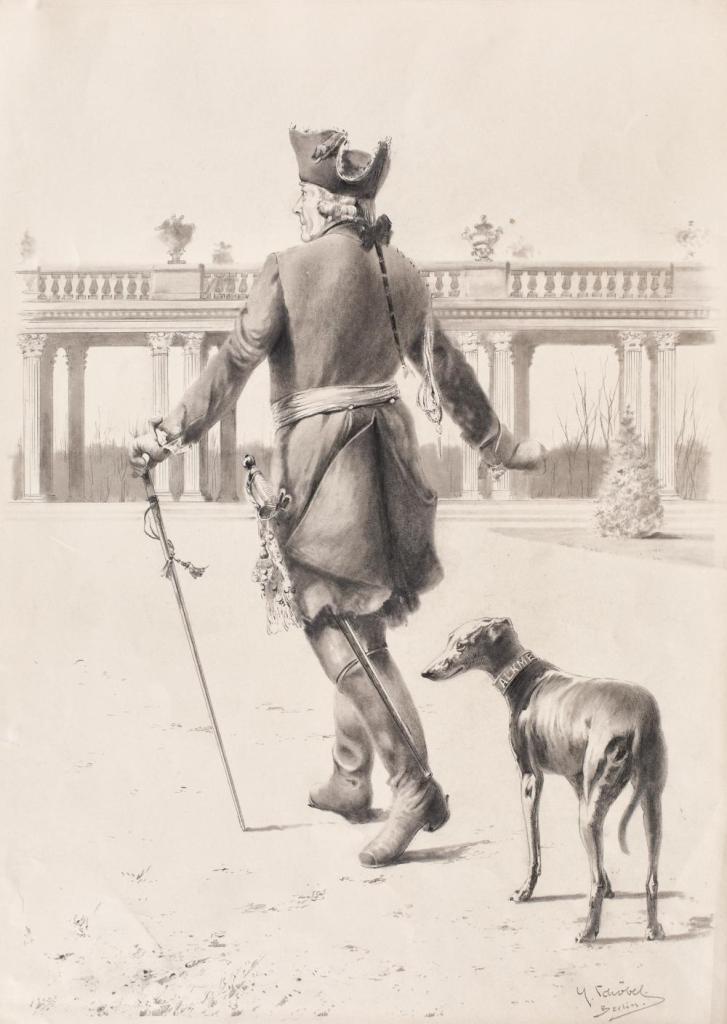
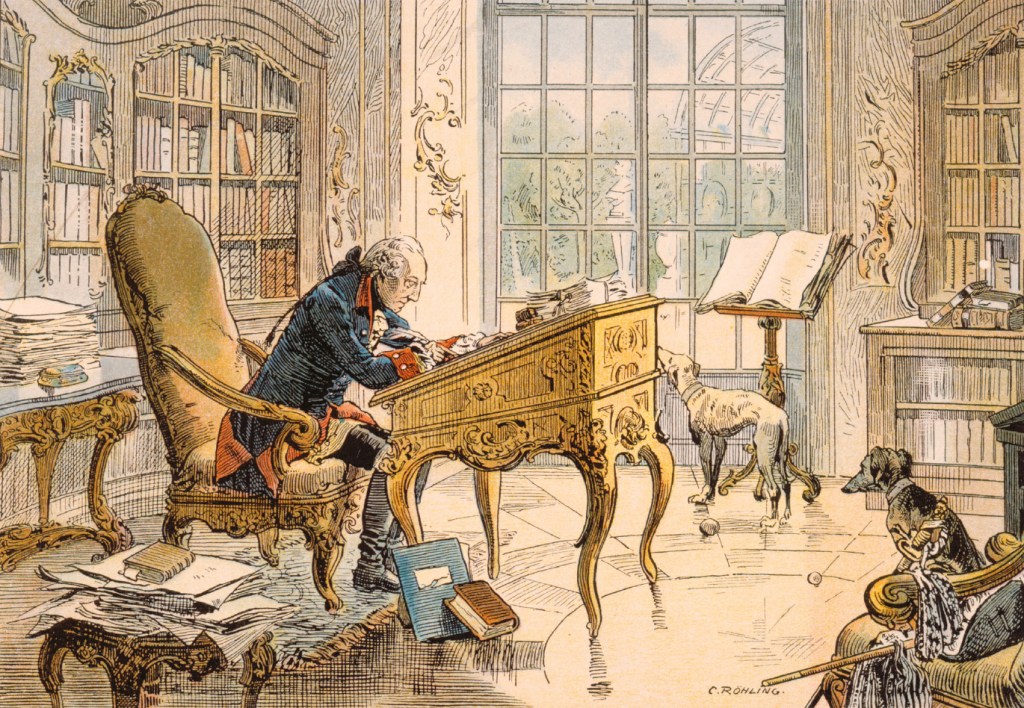
Frederick the Great had dozens of Italian greyhounds (similar to a modern whippet) throughout his life, all of whom were well-loved in a way few nobles could rival. The dogs were fed by the king himself, and some favorites permitted to chase a leather ball through the halls of Frederick’s exquisite summer palace, Sanssouci. In fact, it is actually Frederick the Great who first introduced the phrase, “A dog is a man’s best friend.” A lifetime of tragically losing friends, siblings, and even lovers caused Frederick to become noticeably more misanthropic with age, but he never lost his love for dogs. Even on his deathbed, he was instructing his servants to bring a blanket for the hound on his lap, who was shivering. Dogs were a source of love and comfort to the philosopher king throughout all his adult life.
One of Frederick’s most beloved greyhounds, Biche (which is the French word for “doe”), actually accompanied the king on military campaigns. During the Battle of Soor, the Austrians whom Frederick was fighting captured Biche, along with the rest of Frederick’s luggage. He lost fine flutes, many bottles of wine and good food, and all the other clothing and supplies befitting a king on campaign. However, these were mostly all items he could do without. The one captured artifact that truly broke Frederick’s heart was the taking of his dear dog. His generals reported that the normally stoic king was distraught by the loss of his dog, and when treaties were written to end the Second Silesian War, it was demanded that Biche would be returned to Frederick if the Prussian army would end the conflict. Biche, after the negotiations concluded, was successfully returned to her master, who cried tears of joy when he saw his rescued hound.
Indeed, Frederick adored his numerous pet greyhounds, even requesting to be buried next to his favorite few at Sanssouci Palace. This wish was unfortunately ignored after his death, due to his successor, Frederick William II, choosing to instead bury the king in the Potsdam garrison church. Frederick the Great would have been appalled by this choice, as it meant that he was entombed next to his father, Frederick William I, a man who had brutally abused Frederick throughout his entire childhood. Thankfully, Frederick’s body was moved multiple times for safekeeping during World War II, and was eventually laid to rest with his dogs in a formal ceremony after Germany became reunited at the end of the Cold War.
Citations:
- Avdakov, A. (n.d.). The Life and Times of Frederick the Great. Hosted by Alec Avdakov. https://shows.acast.com/frederick-the-great-podcast
- The Battle of Soor. British Battles. (n.d.). https://www.britishbattles.com/frederick-the-great-wars/the-battle-of-soor
- Frederick the Great | George Washington’s Mount Vernon. Mount Vernon. (n.d.). https://www.mountvernon.org/library/digitalhistory/digital-encyclopedia/article/frederick-the-great
- “Old Fritz and His Dogs.” 2011. Historians Are Past Caring. May 24, 2011. https://learnearnandreturn.wordpress.com/2011/05/25/old-fritz-and-his-dogs/
- Overhoff, J. 2021, December 2. Chapter 4 of Dogs and Horses: Frederick the Great and his dearest animals. Brill. https://brill.com/display/book/9789004495395/BP000004.xml?srsltid=AfmBOopcloz0eBF20jfXgW-HxARWMgzJ5P9eRo-UkNIuuZccdDG9PTRB


Leave a Reply