Note: This was the first article to ever be published on The Alexicon. It isn’t the same quality as my more recent articles, but I keep it here for nostalgic purposes. Read it if you wish, but kindly don’t form your judgement of the platform off of it.
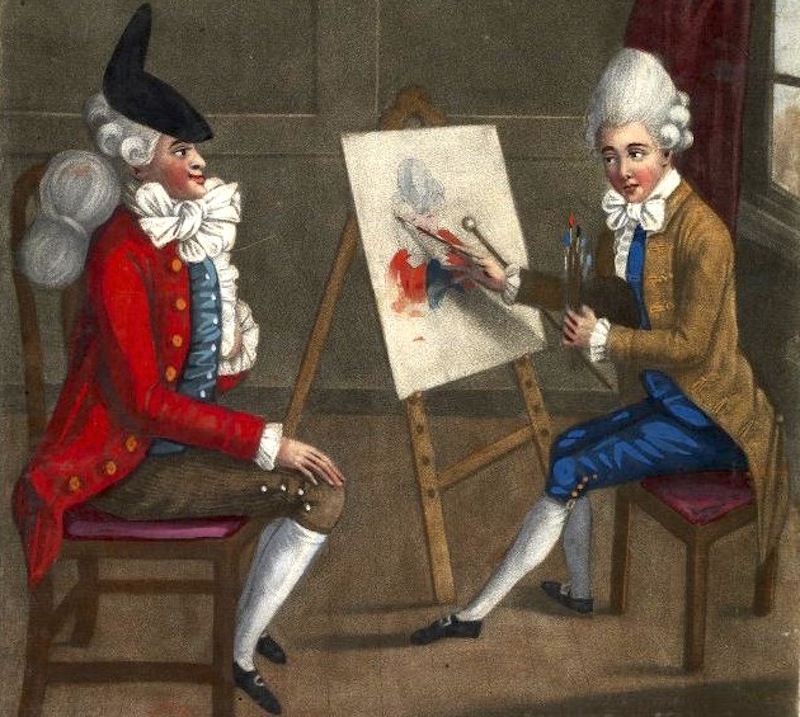
Hamilton fans may be aware of Thomas Jefferson’s invention of macaroni and cheese in the late 18th century. However, the word “macaroni” (initially spelled maccaroni) did not primarily refer to a type of pasta during this time period. A macaroni was, instead, a type of person. Young British men, often those who had completed the then-traditional trip across the European continent, adopted ludicrously overdone fashions such as the wigs shown above.
The aristocratic styles of the French and Italian courts served as a special sort of inspiration for these effeminate fellows. Their adoration of both the foods and fashions of foreign nations was ostentatiously displayed in their style of dress. The illustration below, though satirical, gives an idea of how extreme such styles became during the 1760’s and 1770’s.
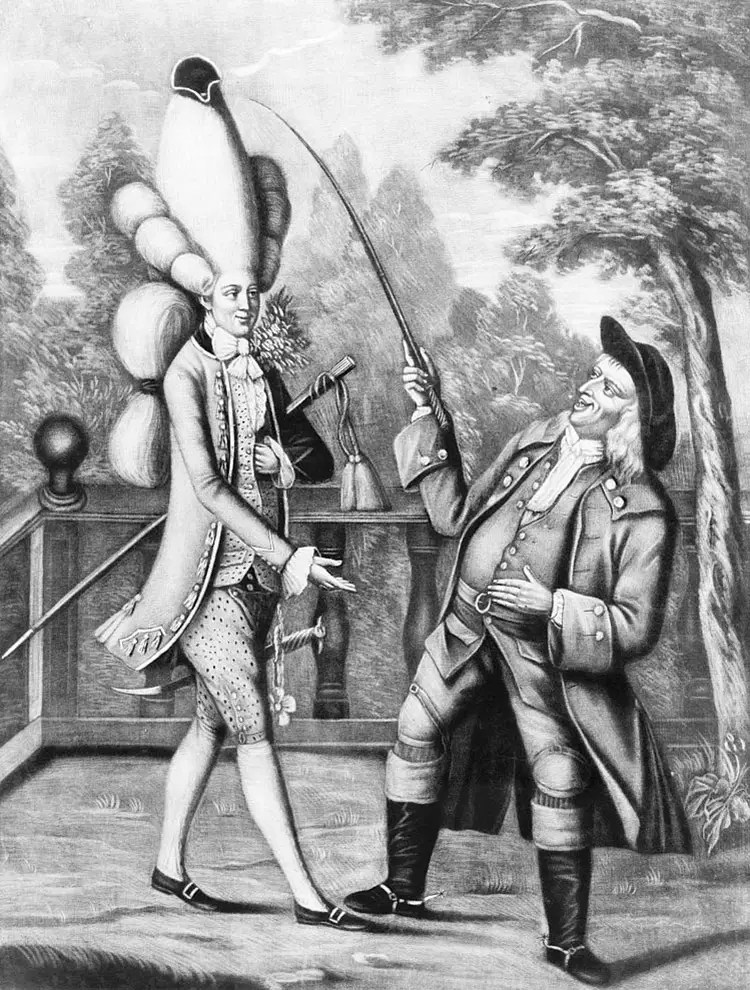
Macaroni attire was often known to include tight-fitting, brightly decorated jackets. Tall, heavily powdered wigs were taken to new extremes, and expensive materials like silk and velvet completed the “uniform.”
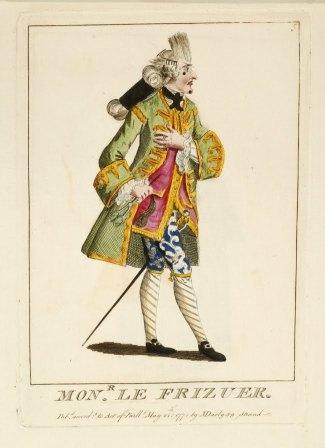
However, this fad escaped the British Isles through a now-popular song. This macaroni subculture took place in the same time period as the American Revolution, with Congress declaring independence on July 4th, 1776. The influence of macaroni styles was called upon mockingly in the song “Yankee Doodle.”
“Yankee Doodle went to town
Riding on a pony
Stuck a feather in his cap,
And called it macaroni.”
This song was originally sung by British soldiers fighting in the 13 colonies, as a way to mock the backwardness of the American rebels. This, of course, had the unintended effect of becoming a point of colonial pride. Pay attention to the aforementioned piece of the song, though.
“Stuck a feather in his cap and called it macaroni.” Such a line was meant to suggest that the Americans lived in such a rustic part of the world that even a simple feather in a cap could be considered a dramatic fashion statement. That was truly a harsh thing to suggest, when one has seen a true macaroni’s appearance.
There you have it, though. Macaroni was never just a type of pasta.
Images and sources (in order of appearance):
- Photo and information:“The Rest Is History.” Lapham’s Quarterly, http://www.laphamsquarterly.org/roundtable/warhol_macaroni. Accessed 14 July 2025.
- Photo and Information: “Meet the Macaronis.” n.d. History Today. https://www.historytoday.com/miscellanies/meet-macaronis.
- Photo: Sanftner, Pat. 2021. “Photo.” Pinterest. Accessed July 14, 2025. https://hu.pinterest.com/pin/400538960617245423/.


